
Introduction
This study employs the Kansei Engineering research method to systematically assess the appearance design of intelligent mite removal robots and improve the company’s first-generation product. The research involved three rounds of questionnaire surveys and advanced through four rounds of design proposals, ultimately producing a design solution that satisfies sensory imagery and generating a design guideline for this product category.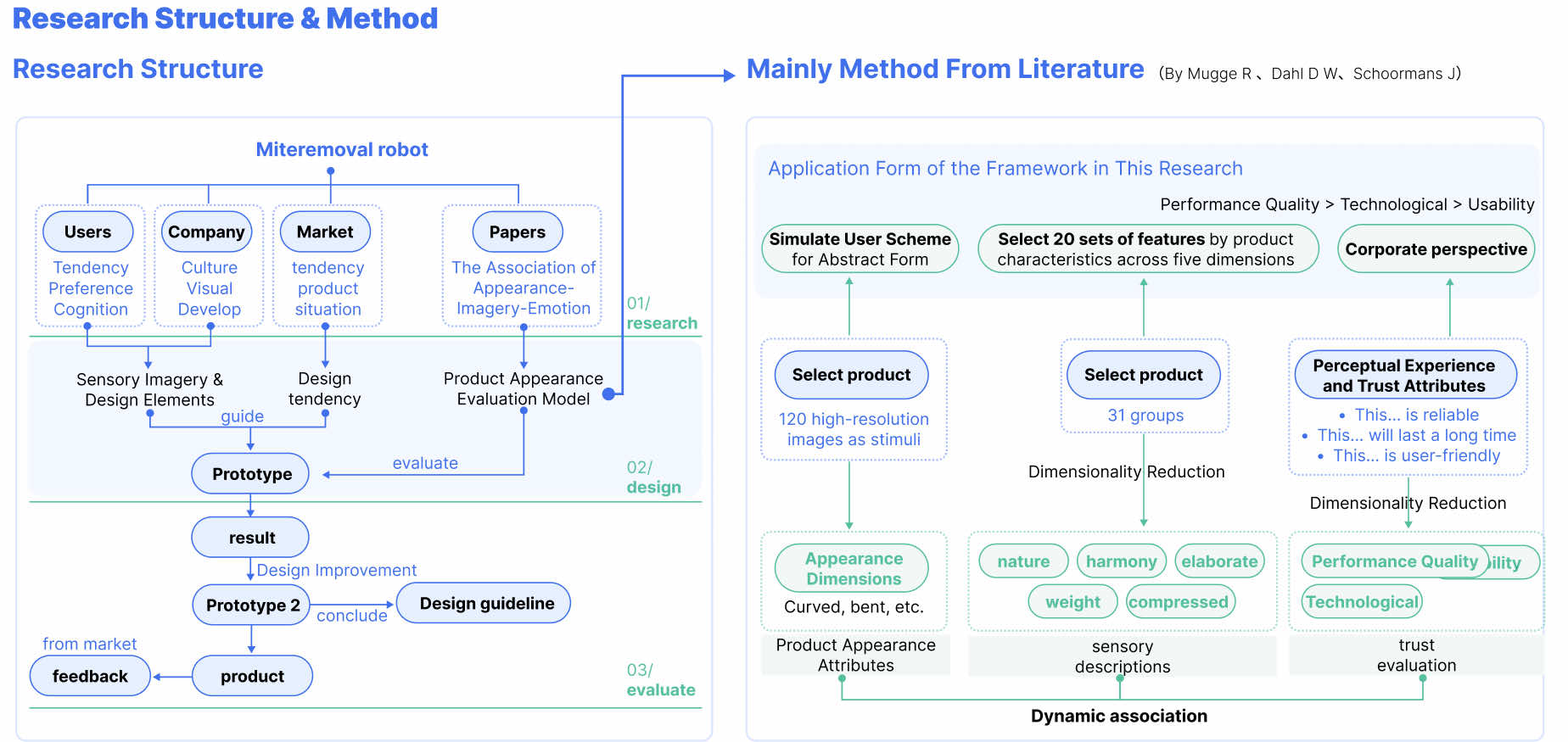
Design Process
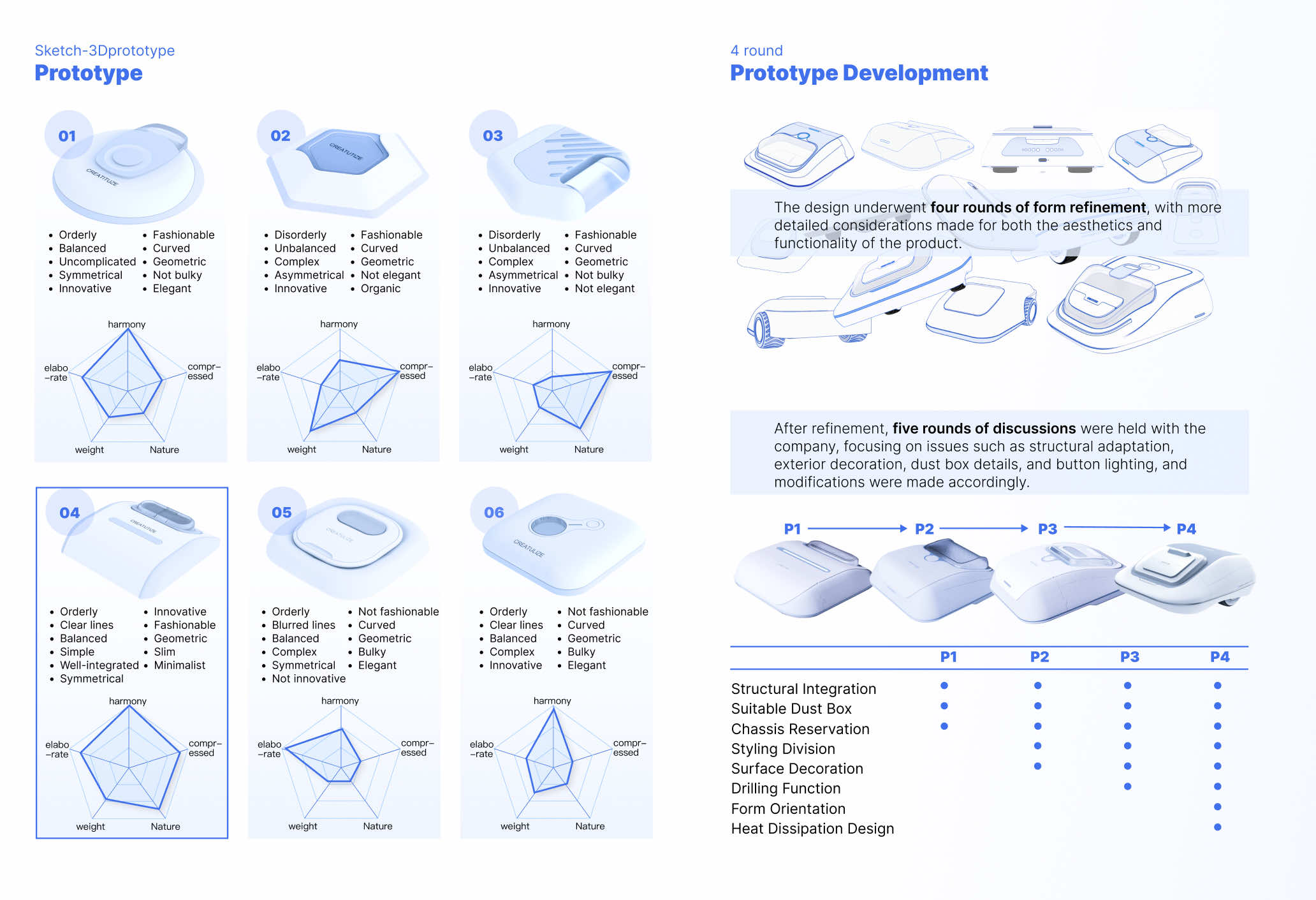
The design underwent four rounds of form refinement, with more detailed considerations made for both the aesthetics and functionality of the product.
After refinement, five rounds of discussions were held with the company, focusing on issues such as structural adaptation, exterior decoration, dust box details, and button lighting, and modifications were made accordingly.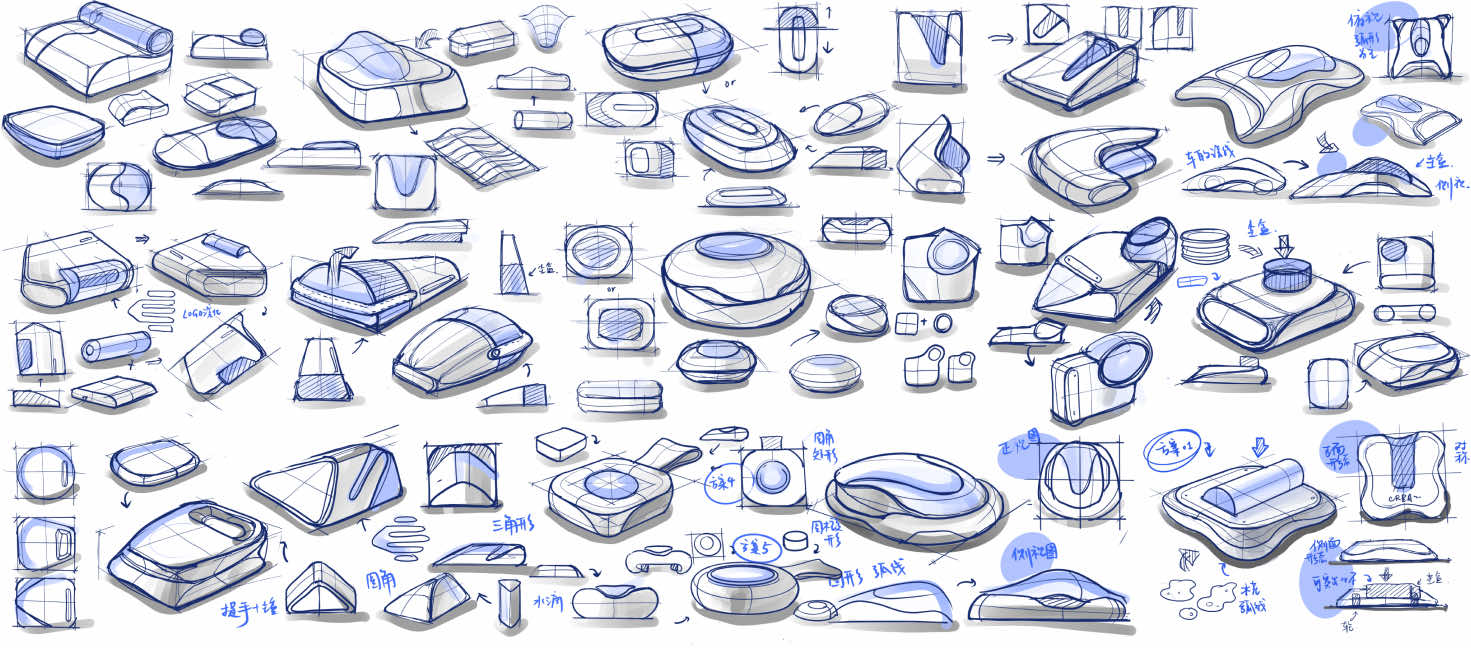
Conclusion
This study primarily utilizes theories related to sensory imagery to guide preliminary design and design validation. It employs a product appearance evaluation system for the assessment and selection of designs. The design practice and validation have been applied to the new product category of intelligent mite removal robots, enhancing the product’s appearance by meeting aesthetic, recognizability, and functionality requirements, and improving its performance in emotional design.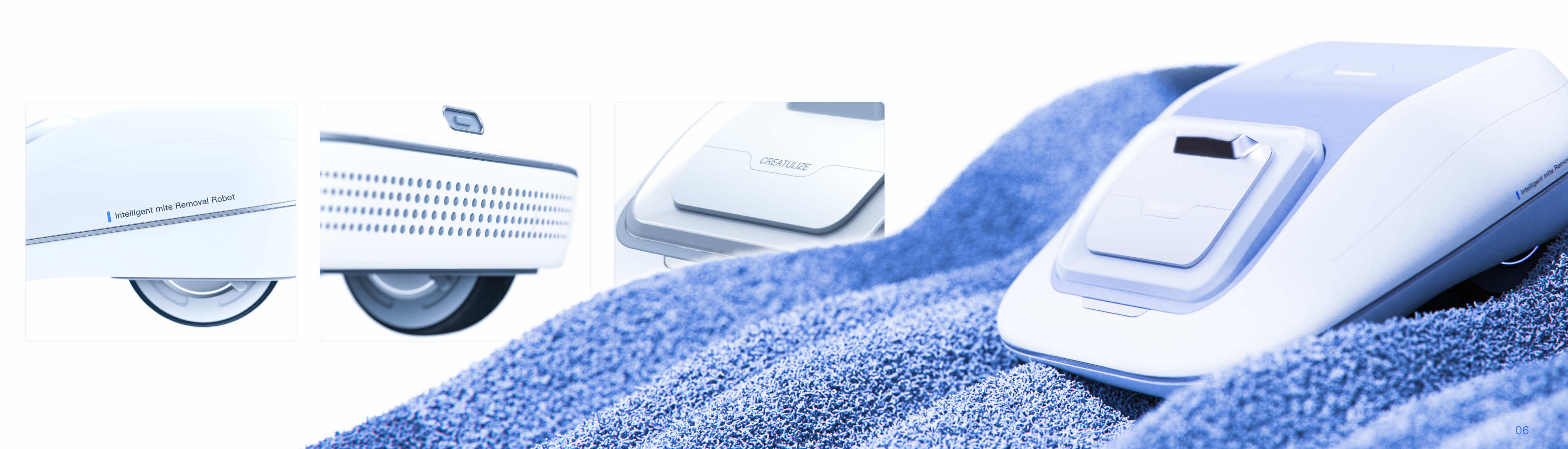
About this Post
This post is written by Jiawen Liu, licensed under CC BY-NC 4.0.